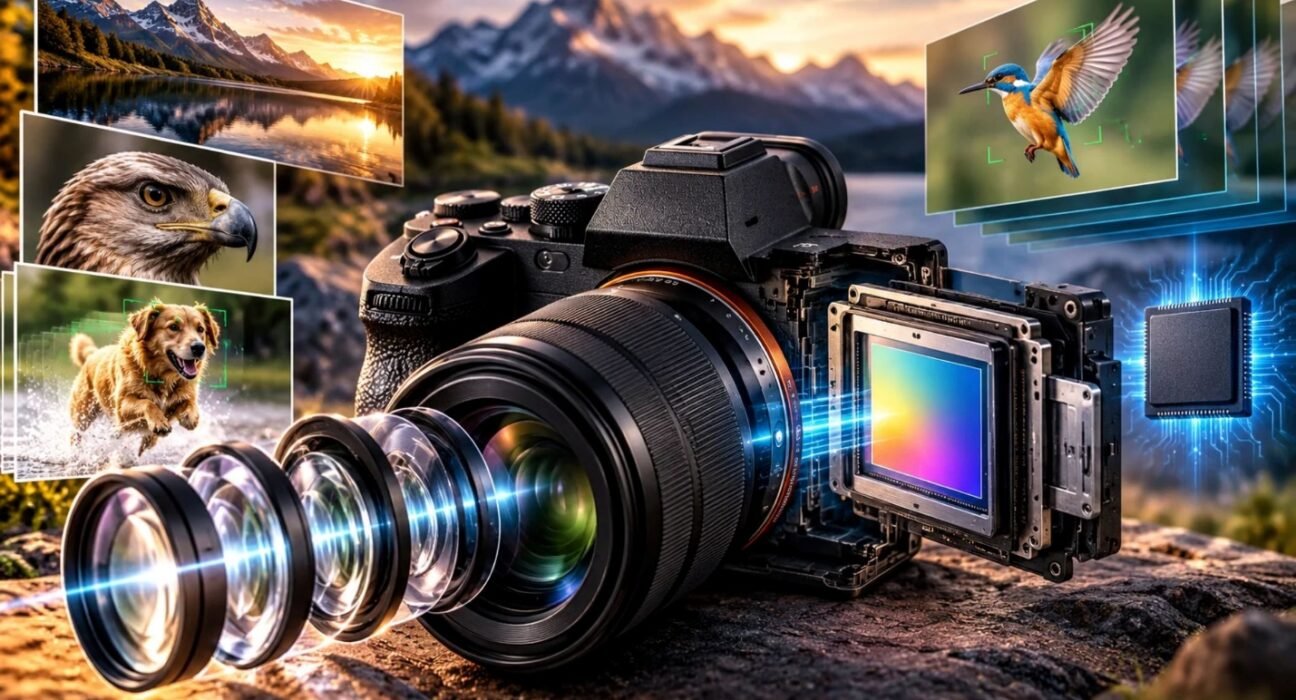
Sony EVIL cameras are interchangeable-lens cameras associated with mirrorless photography, offering features designed to capture detailed images, focus on moving subjects, and handle different lighting conditions. Their performance depends on several factors, including sensor size, autofocus technology, lens quality, and image processing.
For photographers exploring camera technology, understanding these features makes it easier to compare Sony cameras and choose equipment suited to their needs. Some models prioritize high resolution for landscapes and portraits, while others emphasize fast autofocus, continuous shooting, or video recording.
Sony generally markets these products as mirrorless cameras rather than EVIL cameras. However, the underlying technology is what matters most when comparing their capabilities. Here’s how Sony’s sensors, focusing systems, and image processing influence real-world photography.
Table of Contents
ToggleWhat Are Sony EVIL Cameras?
EVIL stands for Electronic Viewfinder Interchangeable Lens. The term is used for cameras that combine interchangeable lenses with electronic viewing systems and are commonly associated with mirrorless camera designs.
Unlike traditional DSLRs, mirrorless cameras do not use the same reflex mirror mechanism to direct light into an optical viewfinder. Instead, light reaches the image sensor, and the camera can display a digital preview on its screen or electronic viewfinder, depending on the model.
This design allows manufacturers to develop compact camera bodies while incorporating advanced imaging technology. Sony’s E-mount range includes APS-C and full-frame mirrorless cameras, giving photographers different options for size, performance, and budget.
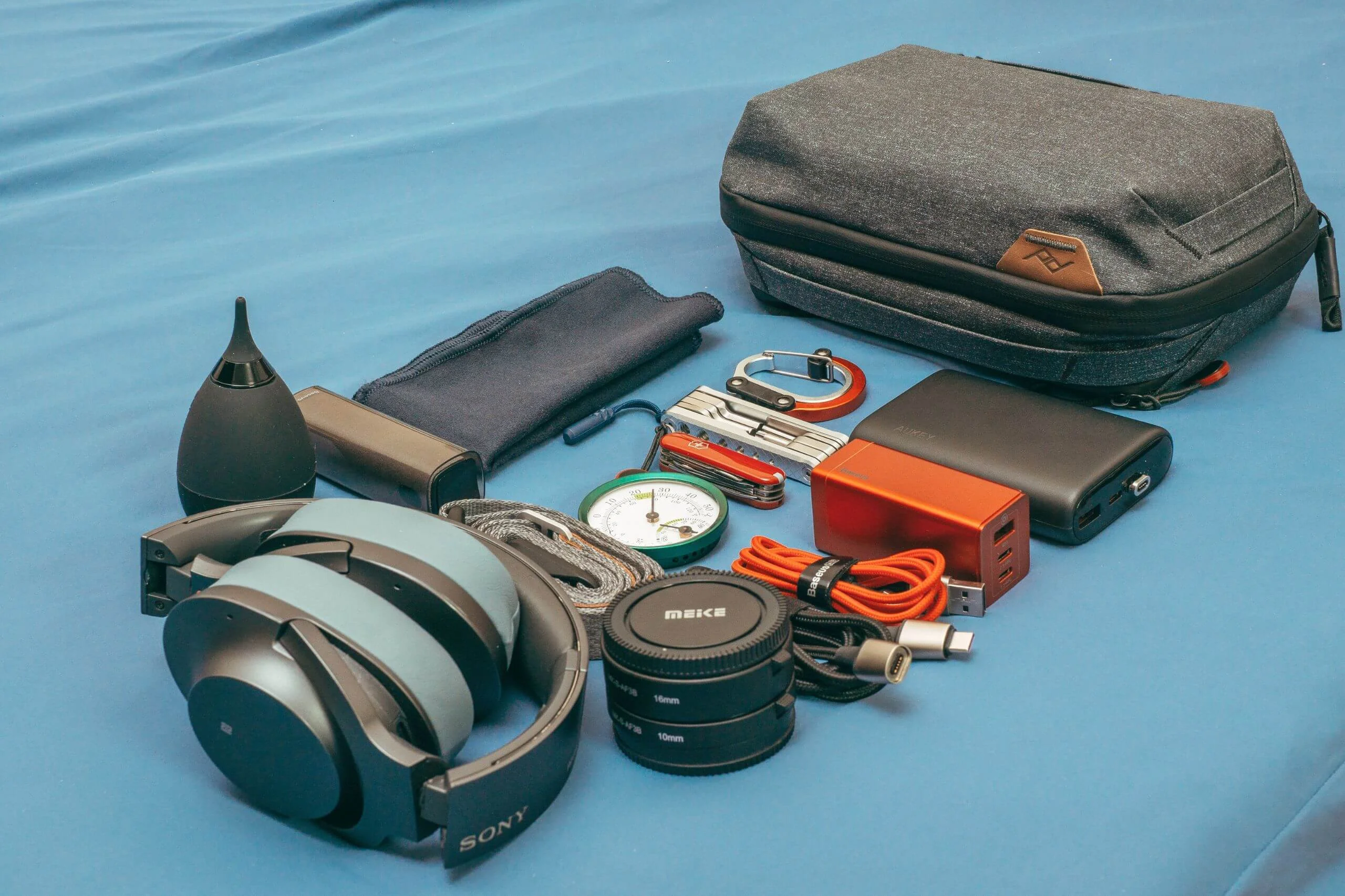
Another advantage is lens flexibility. For photographers planning trips, choosing the right travel tech gadgets can also help make photography more convenient while travelling.
Sony Camera Sensor Size and Technology
The image sensor is one of the most important components in a digital camera. It receives light through the lens and converts it into information that the camera processes into a photograph.
When evaluating Sony camera sensor size, two formats deserve particular attention: APS-C and full-frame.
APS-C sensors are smaller than full-frame sensors. They are commonly used in compact, versatile cameras that balance image quality, portability, and cost. Full-frame sensors use a larger imaging area, which can provide advantages in certain shooting conditions, particularly when controlling depth of field or working in low light.
Feature | APS-C sensor | Full-frame sensor |
Sensor area | Smaller | Larger |
Camera system | Often more compact and affordable | Often larger or more expensive, depending on the model |
Depth of field | Depends on framing, lens, and aperture | Can produce shallower depth of field at equivalent framing and aperture |
Low-light potential | Depends on sensor generation and settings | Often offers an advantage when other conditions are comparable |
Typical uses | Travel, everyday photography, content creation | Portraits, landscapes, events, and professional work |
Neither format automatically guarantees better photographs. Lens quality, exposure, sensor generation, and image processing also affect the final result.
Megapixels are another important specification, but they measure image resolution rather than overall image quality. A camera with more megapixels can capture more fine detail under suitable conditions, provided the lens, focus, and shooting technique support that resolution.
How Sony Camera Sensors Affect Image Quality
Understanding how Sony camera sensors affect image quality helps explain why two cameras with similar megapixel counts can produce different results.
Smartphone cameras also use advanced imaging features, and understanding smartphone camera technology can help readers compare mobile photography with dedicated camera systems.
A sensor records light across millions of photosensitive points. The resulting image depends on the amount of light captured, the sensor’s design, the camera’s processing, and how the photograph is exposed.
Detail and resolution: Higher resolution can be useful when photographing landscapes, architecture, or subjects that require cropping. However, focus accuracy, lens sharpness, and camera movement also influence the detail visible in an image.
Image noise: Noise often becomes more noticeable when photographers use high ISO settings or brighten underexposed photographs. Sensor size and design influence noise performance, but the result also depends on exposure and image processing.
Color and tonal detail: A camera’s sensor and processing pipeline work together to record color and brightness. White balance, lighting conditions, and picture profiles can change the appearance of the final photograph.
For example, a landscape photographer may benefit from a high-resolution sensor when capturing fine details in mountains, trees, and buildings. Someone photographing children indoors may care more about autofocus reliability and clean images at higher ISO settings.
The best sensor is therefore not necessarily the one with the highest megapixel count. It is the one that meets the photographer’s needs.
Understanding the Sony Camera Autofocus System
Autofocus determines how a camera adjusts the lens to bring a subject into focus. A capable Sony camera autofocus system can make it easier to photograph moving subjects, capture sharp portraits, and record video without constantly adjusting focus manually.
Many Sony mirrorless cameras use hybrid autofocus systems that combine phase-detection and contrast-detection methods.
Phase-detection autofocus helps the camera estimate how far and in which direction the lens needs to adjust. Contrast-detection autofocus evaluates image contrast to help determine whether focus is accurate. Combining these methods can provide a useful balance of speed and precision.
Some Sony models also offer subject recognition, eye detection, and tracking features. These technologies can help the camera identify a subject and maintain focus as it moves through the frame.
For portrait photography, eye detection can help keep a person’s eyes sharp. For wildlife photography, supported animal-recognition features can help track a moving subject. Sports photographers may benefit from continuous autofocus when following athletes in motion.
However, autofocus capabilities differ across camera models. Lens performance, available light, subject movement, firmware, and selected settings can all affect results.
How Autofocus Works in Sony Mirrorless Cameras
To understand how autofocus works in Sony mirrorless cameras, imagine photographing a person walking toward you.
The camera detects the subject and evaluates focus using its available autofocus technology. It then adjusts the lens to bring the subject into focus. When continuous autofocus is enabled, the camera repeatedly updates focus as the subject changes position.
Two common autofocus modes are worth understanding.
Single-shot autofocus: Often used for stationary subjects, this mode focuses when the camera activates autofocus. It is useful for landscapes, still-life photography, and portraits where the subject remains relatively still.
Continuous autofocus: Designed for moving subjects, this mode keeps adjusting focus while the camera tracks movement. It can be useful for sports, wildlife, children, and other unpredictable subjects.
Subject tracking can make this process easier by helping the camera follow a selected subject across the frame. Depending on the model, the camera may also recognize people, animals, or other supported subjects.
Autofocus is not infallible. A subject moving unpredictably, poor lighting, obstructions, or an unsuitable lens can make accurate focusing more difficult. Choosing the right focus mode and understanding the camera’s settings remain important.
Sony Camera Low Light Performance
Sony camera low light performance depends on more than the sensor alone. Lens aperture, shutter speed, ISO sensitivity, image stabilization, and the camera’s processing all influence how photographs look in dim environments.
A larger sensor can provide an advantage when capturing more light under comparable shooting conditions. Full-frame models often perform well in low light, although differences between individual cameras and sensors matter.
Lens aperture is equally important. A lens with a wider maximum aperture, such as f/1.8, allows more light to reach the sensor than a lens set to f/4, assuming the same shutter speed.
ISO sensitivity helps photographers work with different lighting conditions, but increasing ISO can make image noise more visible. A faster shutter speed can reduce motion blur, although it may require a wider aperture or higher ISO to maintain proper exposure.
Consider photographing a family gathering in a dimly lit room. A lens with a wide aperture can help capture the scene without relying as heavily on a high ISO setting. If people are moving, a sufficiently fast shutter speed is also necessary to keep them sharp.
Image stabilization can reduce blur caused by camera movement, but it cannot freeze a moving person or animal. For that, shutter speed and appropriate focusing are essential.
Sony Camera Dynamic Range Explained
Sony camera dynamic range refers to the range of brightness levels a camera can record, from darker shadows to brighter highlights while retaining useful detail.
Dynamic range matters when photographing scenes with strong differences between light and shadow. A common example is a landscape with a bright sky and a darker foreground.
A camera with good dynamic range can preserve useful tonal information across a wider brightness range under suitable conditions. This can provide more flexibility when editing photographs, particularly when working with RAW files.
RAW image files retain more image data for post-processing than typical compressed JPEG files, giving photographers greater flexibility when editing images.
Photographers can often recover some shadow detail or reduce bright highlights, although the amount of recoverable information depends on the camera, exposure, ISO, and scene.
For example, a photographer capturing a building against a bright sky may need to protect highlight detail while keeping the building visible. Careful exposure and appropriate editing can help balance the two areas.
Dynamic range is not identical across all Sony cameras, and performance can vary with ISO settings. It is therefore better to compare reliable measurements for specific models than to assume every camera from the same brand performs equally well.
Which Sony EVIL Camera Features Matter Most?
The right camera depends on what you photograph, how you work, and how much you want to spend. Instead of selecting a model based on one impressive specification, consider how its features work together.
Photography need | Features to prioritize |
Portraits | Eye autofocus, suitable portrait lenses, and depth-of-field control |
Wildlife and sports | Continuous autofocus, subject tracking, and burst shooting |
Landscapes | Resolution, dynamic range, and lens sharpness |
Indoor and night photography | Low-light performance, wide-aperture lenses, and appropriate ISO settings |
Travel photography | Weight, battery life, versatile lenses, and stabilization |
Video and vlogging | Video resolution, autofocus, microphone support, and screen design |
Lens availability also deserves attention. A camera body may offer excellent autofocus and image quality, but the lenses you can use will influence the results you achieve.
Before purchasing, check the exact model’s specifications, lens compatibility, battery performance, stabilization features, and video capabilities. Sony’s official APS-C mirrorless camera range and full-frame mirrorless camera range are useful starting points for comparing available features.
Frequently Asked Questions
Are Sony EVIL cameras the same as mirrorless cameras?
The term EVIL is commonly associated with electronic-viewfinder interchangeable-lens cameras, while Sony generally uses the term mirrorless cameras for its E-mount interchangeable-lens range. The terminology can vary, so checking the camera’s actual design and specifications is more useful than relying on the label alone.
Does a larger sensor always produce better image quality?
No. A larger sensor can offer advantages in low-light performance and depth-of-field control, but lens quality, exposure, autofocus, sensor generation, and image processing also affect the final photograph.
Why is autofocus important in Sony mirrorless cameras?
Autofocus helps the camera bring a subject into focus automatically. Features such as continuous autofocus, subject tracking, and eye detection can make it easier to capture moving subjects and sharp portraits, depending on the model.
What affects Sony camera performance in low light?
Sensor design, lens aperture, shutter speed, ISO, image stabilization, and processing all contribute. A wide-aperture lens and appropriate exposure settings can improve results, particularly when photographing moving subjects indoors.
Is a higher megapixel count always better?
Not necessarily. More megapixels can capture additional detail and allow greater cropping flexibility, but they do not automatically improve low-light performance, autofocus, or overall image quality.
Final Thoughts
Sony EVIL cameras, more commonly discussed as Sony mirrorless cameras, combine interchangeable lenses with digital imaging technology designed for a wide range of photography needs.
Sensor size influences light capture and depth-of-field options, autofocus technology helps keep subjects sharp, and dynamic range affects how much detail can be retained across bright and dark areas. Low-light performance depends on these factors working together with suitable lenses and exposure settings.
Rather than choosing a camera based on a single specification, consider the subjects you photograph, the conditions in which you shoot, and the features you will actually use. Understanding these differences will help you evaluate Sony cameras more confidently and choose a system that suits your photography goals.