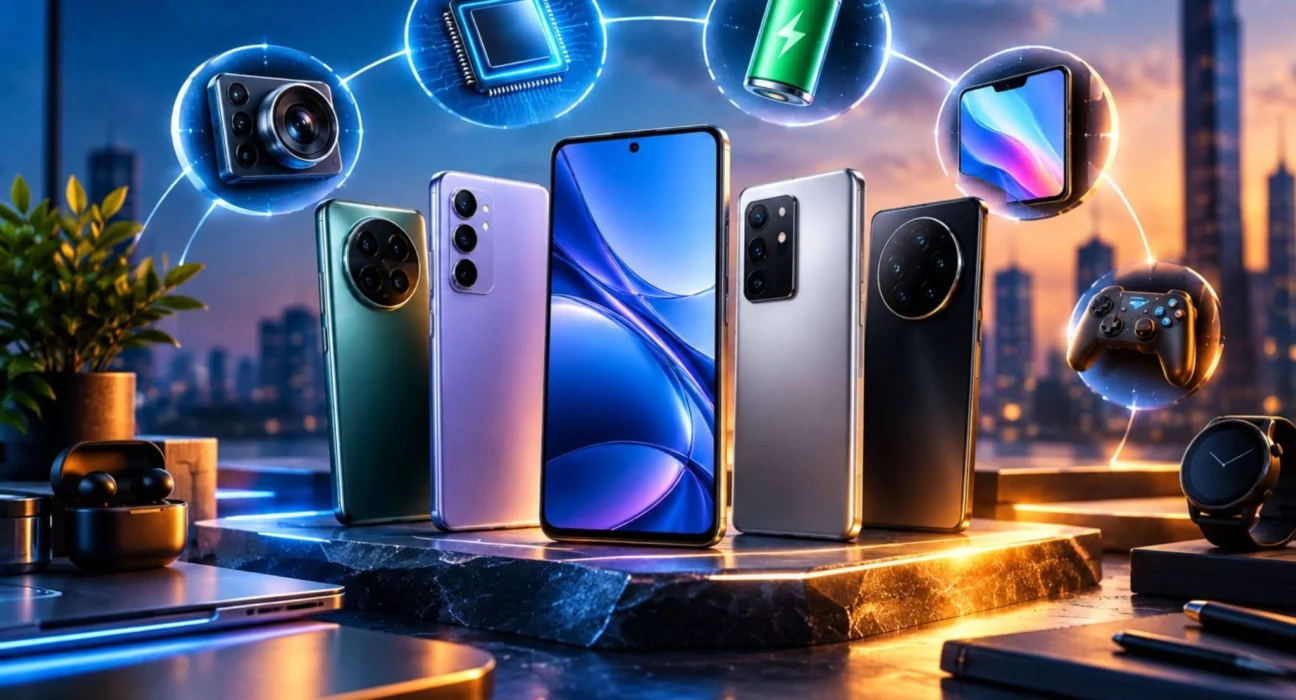
The right mid range android phones in 2027 can offer an impressive balance of performance, usability, and long-term value without requiring the cost of a flagship device.
The mid-range smartphone market has evolved significantly, with many devices now offering capable processors, quality cameras, vibrant displays, strong battery life, fast charging, and extended software support. This gives buyers plenty of options across different needs and budgets.
However, similar specifications do not always deliver the same experience in everyday use. Two phones may look nearly identical on paper but differ considerably in software optimization, camera performance, battery efficiency, gaming capability, or durability.
Before buying a new smartphone, it is worth looking beyond individual specifications and considering the factors that will affect daily use most, including performance, camera quality, battery life, software support, gaming, build quality, connectivity, and long-term reliability.
Table of Contents
ToggleWhat Are Mid-Range Android Phones?
Mid-range Android phones sit between entry-level devices and flagship smartphones. They are designed to provide a balanced experience rather than competing directly with the most expensive devices.
The exact boundaries of the mid-range category can change as smartphone technology develops. A feature that was once considered premium can eventually become common in less expensive phones.
This means buyers should not judge a phone simply by its price category. Instead, consider how well its hardware and software work together.
For everyday activities such as messaging, browsing, video streaming, social media, photography, navigation, and productivity, a well-designed mid-range phone can provide more than enough capability.
Which Processor Should You Look For?
The processor has a major influence on how a smartphone feels during everyday use.
A capable chipset can make applications open quickly, improve multitasking, support demanding games, and help with image processing. However, processor names alone do not tell the entire story.
When comparing phones, consider how the chipset performs alongside the amount of RAM, storage technology, software optimization, and thermal management.
For normal users, spending more on the most powerful processor available may not provide a noticeable benefit. Someone who mainly uses messaging applications, web browsers, streaming services, and social networks may be better served by a balanced processor with good efficiency.
For heavier workloads, including video editing or gaming, additional processing power becomes more valuable.
How Much RAM and Storage Do You Need?
RAM helps Android handle multiple applications and background processes. More RAM can be useful for people who regularly switch between demanding applications.
However, higher RAM capacity does not automatically make every phone faster. Software optimization and processor performance also matter.
Storage deserves equal attention. Applications, photographs, videos, games, and offline media can consume space surprisingly quickly.
If you regularly record high-resolution video or install large games, choosing adequate internal storage from the beginning can be more practical than constantly managing available space.
Also check whether the phone supports expandable storage. Many modern devices do not, so this should not be assumed.
Should Camera Quality Be a Priority?
For many buyers, the camera is one of the most important parts of a smartphone.
A phone marketed as having multiple cameras does not necessarily produce better photographs. Camera performance depends on the main sensor, image processing, lens quality, stabilization, software, and the conditions in which photographs are taken.
If photography matters to you, pay particular attention to the main camera rather than counting the number of lenses.
Someone looking for mid-range smartphones with best cameras should also consider practical situations such as low-light photography, moving subjects, portraits, video recording, and front-camera quality.
A camera that produces consistent results in everyday conditions can be more useful than one with impressive specifications that only perform well under ideal lighting.
Battery Life Matters More Than Battery Size
Battery capacity is useful information, but it does not tell you exactly how long a phone will last.
Battery endurance also depends on the processor, display technology, screen brightness, network connectivity, software optimization, and how the device is used.
A person who spends hours gaming or streaming video will naturally consume more power than someone who primarily sends messages and makes calls.
If battery life is a priority, look beyond the capacity number. Consider independent testing when available and pay attention to charging technology as well.
For people who spend long periods away from a charger, Android phones with long battery life can provide a more convenient experience, particularly when combined with efficient hardware and sensible power management.
Is a Mid-Range Phone Good for Gaming?
Gaming places greater demands on a smartphone than ordinary social media or web browsing.
If gaming is important, look for a capable chipset, adequate RAM, fast storage, a responsive display, effective thermal management, and a battery that can handle extended sessions.
The fastest processor is not always the best choice if a device becomes excessively warm and reduces performance during longer gaming sessions.
People searching for mid-range Android phones for gaming should therefore consider sustained performance rather than short benchmark results.
Also think about the types of games you play. Casual titles have very different requirements from graphics-intensive games.
Don’t Ignore the Display
The display is the part of the phone you interact with constantly, so its quality can have a significant effect on the overall experience.
Consider factors such as screen size, resolution, brightness, refresh rate, color reproduction, and visibility outdoors.
A higher refresh rate can make scrolling and supported animations feel smoother. However, it may also affect battery consumption depending on the implementation.
Display quality is particularly important if you spend a lot of time watching videos, reading, browsing websites, or playing games.
Rather than focusing on one specification, consider how the complete display performs in the situations where you will use it most.
Software Support Can Determine Long-Term Value
A smartphone is not just hardware. Software support can affect how useful the device remains over several years.
Before buying, check the manufacturer’s stated policy for Android version updates and security updates. Longer support can make a phone a more sensible long-term purchase.
Also consider the software interface itself. Android manufacturers can customize the operating system extensively, so two phones running Android may provide noticeably different experiences.
Look for software that feels responsive, avoids unnecessary clutter, and provides the features you actually use.
This is particularly important when comparing affordable Android phones with premium features. A strong hardware package can lose some of its appeal if the software experience is poorly maintained.
Build Quality and Durability Still Matter
A smartphone can have excellent specifications and still be a poor choice if it cannot withstand everyday use.
Look at the materials, frame construction, screen protection, and available water or dust resistance. A protective case and screen protector can also make a practical difference.
Durability is especially relevant if you plan to keep the phone for several years.
A slightly less powerful device with solid construction may provide better long-term value than a phone that prioritizes specifications while compromising on everyday usability.
Connectivity and Everyday Features
Modern smartphones are also communication devices, so connectivity should not be overlooked.
Depending on your location and carrier, you may want to check support for the appropriate 4G or 5G networks, Wi-Fi standards, Bluetooth, NFC, and navigation systems.
Other details can also affect everyday convenience. These may include fingerprint authentication, stereo speakers, USB connectivity, dual-SIM support, wireless charging, or an audio jack.
Not every buyer needs all of these features. The important question is whether the phone includes the capabilities that fit your routine.
How to Find the Best Value Without Chasing Specifications
The best value Android smartphones are not necessarily the ones with the most specifications.
Value comes from how well a phone meets your needs over its useful lifespan.
For example, a person who takes many photographs may benefit more from a stronger camera system than from additional gaming performance. Someone who travels frequently may prioritize battery endurance and connectivity. A mobile gamer may care more about sustained performance and cooling.
This is why comparing phones based on a specification sheet alone can lead to the wrong decision.
Think about your daily routine first, then determine which hardware and software characteristics matter most.
Common Buying Mistakes to Avoid
One of the biggest mistakes is buying a phone because one specification looks impressive.
A large camera megapixel count, high RAM capacity, or fast charging figure does not automatically guarantee a better overall experience.
Another mistake is ignoring software support. A phone may seem affordable initially but become less attractive if it receives limited updates.
Buying too much performance is another common issue. If you never play demanding games or use intensive applications, paying for hardware you rarely use may not make practical sense.
Finally, avoid choosing a phone without considering storage requirements. Running out of space can become frustrating long after the excitement of buying a new device has disappeared.
Should You Buy a Mid-Range Android Phone in 2027?
For many people, yes. Mid range android phones can offer a strong balance between performance, usability, camera capabilities, battery life, and long-term practicality.
The right choice depends on how you use your phone rather than simply how much you want to spend.
If you need reliable everyday performance, you may not need flagship-level hardware. If photography is your priority, focus on camera consistency and image processing. If gaming matters, prioritize sustained performance and thermal management. If you plan to keep your phone for years, software support and durability deserve greater attention.
Buy according to your habits, not the specification race.
FAQs
Are mid-range Android phones worth buying in 2027?
Yes. A well-balanced mid-range Android phone can provide strong everyday performance, capable cameras, good battery life, and useful software features without requiring flagship-level hardware.
How long can a mid-range Android phone last?
The useful lifespan depends on hardware quality, software support, battery health, and how heavily the phone is used. Checking the manufacturer’s update policy before buying can help you make a better long-term decision.
Are mid-range Android phones good for gaming?
Many are capable of handling mobile games effectively. For demanding games, prioritize the processor, sustained performance, cooling, RAM, display responsiveness, and battery endurance rather than relying on one specification.
What should I prioritize when buying a mid-range Android phone?
Start with your personal usage. Performance, camera quality, battery life, software support, display quality, storage, durability, and connectivity are all worth considering, but their importance varies from person to person.
Are mid-range phones better value than flagship phones?
They can be, particularly when you do not need the specialized capabilities of a flagship. A mid-range device can provide the features and performance most users need while avoiding the additional cost of premium hardware.