
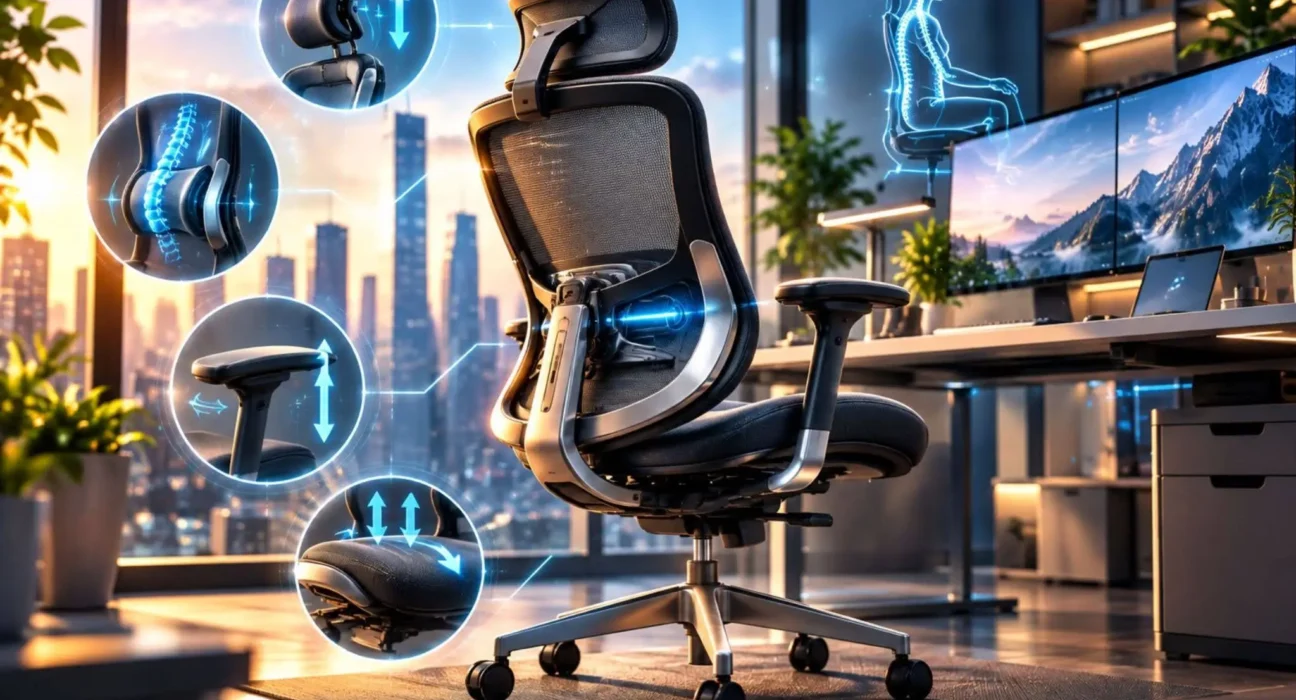
The modern office is changing, and furniture is becoming an increasingly important part of that transformation. An ergonomic office chair is no longer simply a seat placed behind a desk. Better materials, adjustable components, digital controls, and thoughtful design are changing how people interact with their workspaces.
A well-designed chair can support a more comfortable working position, make it easier to adjust the workstation to individual preferences, and complement the way modern offices are being designed. At the same time, technology is introducing new possibilities for office furniture, from automatic adjustments to connected workspace systems.
The shift is part of a broader movement toward work environments that are more flexible, personalized, and focused on everyday usability.
Table of Contents
ToggleWhat Makes an Office Chair Ergonomic?
An ergonomic office chair is designed to support a comfortable and adaptable sitting position. Rather than forcing every user into the same posture, it typically provides adjustments that allow the chair to better accommodate different body sizes, desk heights, and working preferences.
Common adjustment points can include seat height, seat depth, backrest position, armrests, and lumbar support. Some designs also allow users to adjust recline tension or the angle of the backrest.
The objective is not to create one “perfect” sitting position. People naturally move while working, so a useful chair should allow comfortable changes in position throughout the day.
This adaptability is particularly relevant in offices where employees use the same type of workstation for different tasks. Read another article on Top Life‑Saving Gadgets to Enhance Safety.
How Smart Design Is Changing Office Furniture?
Office furniture is increasingly being influenced by technology. While not every chair needs electronic controls or connected features, smart design can make adjustments and workspace management more intuitive.
Some advanced furniture concepts incorporate sensors, electronic controls, memory settings, or integration with other workplace technologies. These features can allow users to personalize their environment instead of manually adjusting every element each time they sit down.
This is where smart office furniture technology becomes relevant. The concept extends beyond chairs to desks, lighting, meeting spaces, and other elements that make up a connected workplace.
However, technology should serve a practical purpose. A complicated feature that users rarely need may add complexity without improving the actual working experience.
Why Adjustability Matters in a Modern Workspace?
A single chair setting cannot comfortably accommodate everyone.
People have different heights, body proportions, desk arrangements, and working habits. An employee who spends most of the day typing may want a different setup from someone who regularly participates in meetings or works with multiple screens.
That is why adjustable office chairs for comfort can be useful in shared and individual workspaces.
Important adjustments may include:
- Seat height for aligning the body with the desk
- Armrest positioning to support different working styles
- Backrest adjustment for different sitting positions
- Lumbar support adjustment where available
- Recline controls for changing position during the workday
The value of these adjustments comes from using them correctly. A chair with numerous controls is not automatically better if the user does not know how to configure it.
The Role of Technology in Office Chair Design
Technology can make office furniture more adaptable, but its role should be considered carefully.
The growing interest in office chair technology and innovation includes features such as electronic adjustment systems, programmable settings, sensors, and integrated controls. Depending on the design, these features may help users maintain preferred settings or simplify adjustments.
Connected furniture could also become part of larger workplace systems. For example, an office might use sensors to understand how meeting rooms, desks, or shared spaces are being used. This information could help organizations plan layouts and allocate workspace more efficiently.
The important distinction is between technology that solves a genuine problem and technology added simply because it is possible. Read another article on Smart Home Devices That Make Daily Life Easier
Comfort Should Be Part of Workspace Planning
An office chair does not exist in isolation. Desk height, monitor position, keyboard placement, lighting, and available workspace all influence how comfortable a workstation feels.
This makes modern office workspace design more holistic than simply buying attractive furniture.
For example, a chair may be adjusted correctly, but a monitor positioned too low or too far away can still make the workstation uncomfortable. Similarly, a desk that is too high or too low can make it difficult to maintain a natural working position.
A practical workspace therefore considers the relationship between furniture and technology.
Why Long Working Hours Require Better Furniture?
People who spend extended periods at a desk may notice small problems more quickly than occasional users.
A chair that feels acceptable for 20 minutes may become uncomfortable after several hours. Poor adjustability, inadequate support, unsuitable seat dimensions, or a poorly matched desk can become particularly noticeable during longer work sessions.
For this reason, comfortable chairs for long work hours should allow users to change position and adjust the chair according to their needs.
Movement also matters. Even a well-designed chair should not encourage someone to remain completely stationary for hours. Standing, walking, stretching, and changing working positions can all be useful parts of a more flexible work routine.
Smart Features Should Improve the User Experience
The phrase “smart” can mean many things in office furniture. Some products may offer simple mechanical adjustments, while others may introduce electronic controls or connected functionality.
Useful smart features in office chairs could include saved adjustment settings, intuitive controls, or systems that make personalization easier.
In a shared office, personalized settings could potentially be especially useful. If several employees use the same workstation, quick adjustments can make it easier for each person to configure the chair to their preference.
Still, the basic fundamentals should come first. A chair should be comfortable, stable, adjustable, and appropriately sized before additional technology becomes a consideration.
How Office Technology Is Influencing Furniture Design?
The relationship between furniture and technology is becoming more noticeable as workplaces adopt more digital tools.
Laptops, multiple monitors, video conferencing equipment, wireless accessories, charging systems, and collaborative displays have changed what people expect from an office.
This has created demand for technology for modern office spaces that works alongside furniture rather than being treated as a separate consideration.
A workstation may now need to accommodate multiple screens, cable management, charging devices, webcams, and other equipment. Furniture designers therefore have to think about technology integration as part of the overall workspace.
The result is a more connected approach to office design.
Designing Healthier and More Flexible Workspaces
Furniture can contribute to a more comfortable working environment, but it should not be presented as a substitute for movement or professional medical advice.
A practical approach combines adjustable furniture with sensible working habits.
A workspace can be improved by positioning the screen appropriately, keeping frequently used equipment within easy reach, adjusting the chair and desk to suit the user, and taking regular breaks from prolonged sitting.
These principles are central to healthy workplace furniture solutions, where the objective is to create an environment that supports users rather than simply filling available space.
The best office setup is often the one that makes good working habits easier.
What Should You Look For When Selecting an Office Chair?
The right chair depends on the user, workstation, and type of work. Before purchasing, consider how the chair will actually be used.
Start with adjustability. A chair should offer enough control to accommodate the user’s height, desk, and preferred working position.
Next, consider seat dimensions and back support. A chair that looks impressive may still be unsuitable if its proportions do not match the person using it.
Build quality also matters. A chair intended for frequent daily use should be stable and constructed for regular adjustment.
Finally, consider whether technological features genuinely add value. Electronic controls, memory settings, or connected features can be convenient, but they should not overshadow comfort and practical usability.
The Future of Office Furniture
The development of office furniture is likely to continue alongside changes in workplace technology.
Flexible work arrangements, hybrid offices, shared workstations, and increasingly digital workflows are influencing how organizations think about physical space.
These developments are also shaping modern office furniture trends, with greater attention being given to flexibility, adaptability, sustainability, technology integration, and user experience.
Future furniture may become more responsive to individual preferences and workplace conditions. However, successful design will still depend on fundamental principles: comfort, adjustability, durability, usability, and sensible workspace planning.
Technology can enhance those principles, but it cannot replace them.
Are Smart Office Chairs Worth It?
A smart or technologically advanced chair can be worthwhile when its features address a genuine need.
For someone who frequently adjusts their workstation, shares an office, or values personalized settings, additional controls may offer practical benefits. For another user, a well-built traditional chair with excellent adjustability may provide everything they need.
The best approach is to evaluate the chair as part of the entire workstation rather than treating technology as the deciding factor.
An ergonomic office chair should first provide a comfortable and adaptable foundation. Smart features are most useful when they make that foundation easier to personalize and use.
FAQs
What is an ergonomic office chair?
An ergonomic office chair is designed to support a comfortable and adjustable sitting position. It commonly provides controls for elements such as seat height, backrest position, armrests, and lumbar support.
Can technology make office chairs more comfortable?
Technology can make adjustments and personalization easier, particularly when chairs include programmable settings, electronic controls, or other smart functions. However, comfort still depends heavily on proper fit and adjustment.
Are adjustable chairs better for long working hours?
Adjustability can be useful because different users have different body proportions and working habits. A chair that can be properly configured may provide a more suitable setup for extended desk work.
What smart features can office chairs have?
Depending on the product, smart chairs may include electronic controls, memory settings, sensors, or connected functions. The usefulness of these features depends on how well they solve a user’s specific needs.
How does office furniture fit into modern workspace design?
Furniture is increasingly being designed alongside technology, lighting, desks, monitors, and collaboration tools. This creates workspaces that are more adaptable to different tasks and working styles.
Conclusion
The modern office chair is becoming part of a broader shift toward flexible and technology-aware workspace design. An ergonomic office chair can provide the adjustable foundation needed for different users, while smart features can make personalization more convenient.
The most effective approach is not to add technology for its own sake. Good office furniture should first be comfortable, adaptable, durable, and easy to use. When technology genuinely improves those qualities, it can play a valuable role in creating more practical and modern workplaces.