Microplastics in food and water have become one of the most widespread forms of modern pollution, even though most people never see them. These particles are usually smaller than five millimeters, and many are far smaller, falling into the category of nanoplastics. They are light, durable, and extremely persistent, which allows them to move easily through water systems, soil, air, and food chains.
What makes this issue especially concerning is that exposure is no longer limited to specific environments. Instead, microplastics in food and water are now part of everyday life. They appear in drinking water, packaged foods, kitchen tools, and even fresh produce. This means exposure happens continuously through normal activities such as cooking, eating, drinking, and cleaning.
Over time, this creates a constant cycle of microplastic exposure. The more modern lifestyles rely on plastic materials, the more these particles enter daily routines. As a result, understanding where they come from and how they behave is becoming increasingly important for both health awareness and environmental awareness, especially in broader sustainability discussions such as
renewable energy sources.
Table of Contents
ToggleMicroplastics in Food and Water Through Drinking Water Systems
Drinking Water as a Continuous Exposure Pathway
One of the most direct ways microplastics in food and water enter the human body is through drinking water. Both bottled water and tap water can contain plastic particles, even when they appear clean and safe. This happens because microplastics are extremely small and can pass through many conventional filtration systems.
Water treatment facilities are designed to remove bacteria, chemicals, and larger contaminants, but they are not fully effective against microscopic plastic particles. As a result, wastewater treatment limitations allow microplastics to remain in treated water. Once they enter the water supply, they become a daily exposure source. The World Health Organization’s report on microplastics in drinking-water provides additional background on this pathway.
Bottled water can also contribute significantly to exposure. Plastic bottles and caps may release particles into the water, especially when exposed to heat or repeated opening and closing. This means that even convenience-focused water sources can increase microplastic intake rather than reduce it.
Boiling and Filtration as a Practical Household Method
A simple but effective method for reducing microplastics in food and water involves a two-step process: boiling water followed by filtration. This method does not require advanced equipment and can be used in most households.
When water is boiled, dissolved minerals such as calcium carbonate begin to form solid deposits known as limescale precipitation. These mineral formations act like traps, capturing microplastics and nanoplastics as they form. Once the water cools, these trapped particles can be removed through basic filtration methods such as cloth filters or simple strainers. Evidence supporting this approach is discussed in research on boiling and coprecipitation-based microplastic removal in tap water.
This boiling and filtration technique is especially effective in areas with hard water. Hard water contains higher mineral content, which increases the formation of limescale and improves the removal of microplastics. In softer water, the process is still useful but less efficient.
While it is not a complete solution, this household water purification method provides a practical step toward improving drinking water safety and reducing daily exposure.
Natural and Advanced Solutions for Microplastics in Food and Water Removal
Moringa Seeds as a Natural Water Treatment Option
Moringa seeds have gained attention as a natural method for reducing microplastics in food and water. The seeds produce an extract that acts as a biodegradable coagulant, meaning it helps particles in water stick together.
This process works through charge neutralization in water. Microplastics normally repel each other due to electrical charges, which keeps them suspended in water. When moringa extract is added, these charges are neutralized, allowing particles to clump together into larger groups.
Once these clusters form, they can be removed through filtration or sedimentation. This makes the process similar to traditional water treatment methods but without relying on synthetic chemicals.
Because moringa is biodegradable and naturally sourced, it is considered a sustainable water treatment option. It is especially valuable in rural water solutions where access to advanced filtration systems may be limited. Its low cost and natural origin make it an attractive alternative for reducing microplastic contamination in drinking water systems.
Engineered Algae and Future Water Treatment Systems
Another promising innovation involves engineered algae designed specifically to capture microplastics in food and water systems. These algae are modified to produce a compound called limonene, which gives them water-repelling properties.
This property allows the algae to attract plastic particles through hydrophobic interaction. Since microplastics also repel water, they naturally bind to the algae surface. Once attached, they begin to cluster together into larger formations.
These clusters are easier to separate from water compared to individual particles. The process can be scaled using bioreactor technology, which allows controlled environments to grow algae and treat large volumes of water. This kind of progress also reflects the broader role of technology innovation in industry in solving modern environmental challenges.
Beyond removal, this system also supports circular economy solutions. The collected plastic material may be repurposed into composite bioplastic films, turning waste into usable material. This approach combines pollution control with material reuse, offering a long-term sustainable solution.
Hidden Sources of Microplastics in Food and Water in Your Diet
Processed Foods and Packaging Exposure
Many people assume microplastics in food and water come mainly from seafood or water, but processed foods are another major source. Plastic packaging pollution plays a large role in this contamination.
Even opening a plastic package can release microscopic particles. Cutting, tearing, or handling plastic materials increases this effect. Over time, repeated exposure from packaged foods adds to overall intake.
Ultra-processed foods are particularly affected because they go through multiple stages of industrial handling. Each stage introduces new opportunities for contamination. From production to packaging to transportation, plastic contact is frequent and unavoidable in modern food systems.
Hot Beverages and Temperature-Driven Contamination
Hot beverages are another significant contributor to microplastics in food and water. Plastic tea bags, disposable cups, and plastic-lined containers can all release particles when exposed to heat.
Heat accelerates plastic breakdown, making it easier for microplastics to enter liquids. This means drinks such as tea and coffee can contain particles even before additives like milk or sugar are added.
Plastic-lined takeaway cups also contribute to exposure, especially when used for hot liquids. Even bottled beverages may release particles depending on storage conditions and temperature changes.
Fruits, Vegetables, and Salt Contamination
Microplastics in fruits and vegetables occur when plants absorb particles from contaminated soil or water. These nanoplastics in plants can enter root systems and travel into edible parts of the plant.
This means that even fresh produce can contain trace levels of plastic particles. While washing can reduce surface contamination, it cannot remove particles that are already inside plant tissues. A recent review of micro and nanoplastics in fruits and vegetables explores how this contamination can occur in produce.
Salt is another common source of contamination. During extraction, processing, and packaging, plastic particles can enter salt products. Because salt is used daily in cooking, this becomes a consistent source of microplastics in food and water exposure.
Your Kitchen as a Major Source of Microplastics in Food and Water
Packaging and Storage Materials
Plastic packaging is one of the most persistent sources of contamination in kitchens. Every time a package is opened, cut, or squeezed, small particles can be released.
Plastic containers used for food storage also degrade over time. Heat, washing, and repeated use weaken the material, increasing microplastic release into stored food and liquids. This makes long-term storage in plastic containers a hidden but important source of exposure.
Cookware and Kitchen Tools
Kitchen tools contribute significantly to microplastics in food and water. Plastic chopping boards release particles every time a knife cuts across their surface. These particles directly transfer into food being prepared.
Non-stick cookware can also release particles when surfaces become scratched or overheated. Plastic utensils, mixing bowls, and blenders add further exposure during cooking and preparation.
Heat plays a major role in increasing release rates. High temperatures during cooking or microwaving can break down plastic materials more quickly, increasing contamination levels in prepared meals.
Cleaning Tools and Household Exposure
Cleaning tools are often overlooked but important sources of microplastic pollution. Sponges gradually break down during use, releasing particles into wastewater systems.
Microfiber cloths also shed tiny plastic fibers during cleaning. These fibers enter drainage systems and eventually return to the environment, continuing the cycle of microplastics in food and water exposure.
Reducing Exposure to Microplastics in Food and Water at Home
Reducing microplastics in food and water does not require eliminating plastic completely. Instead, small and consistent changes can reduce exposure significantly over time.
Switching to glass or stainless steel containers reduces direct contact with plastic materials. Avoiding heating food in plastic containers helps prevent heat-related breakdown. Choosing fresh and less processed foods reduces exposure from packaging and industrial processing.
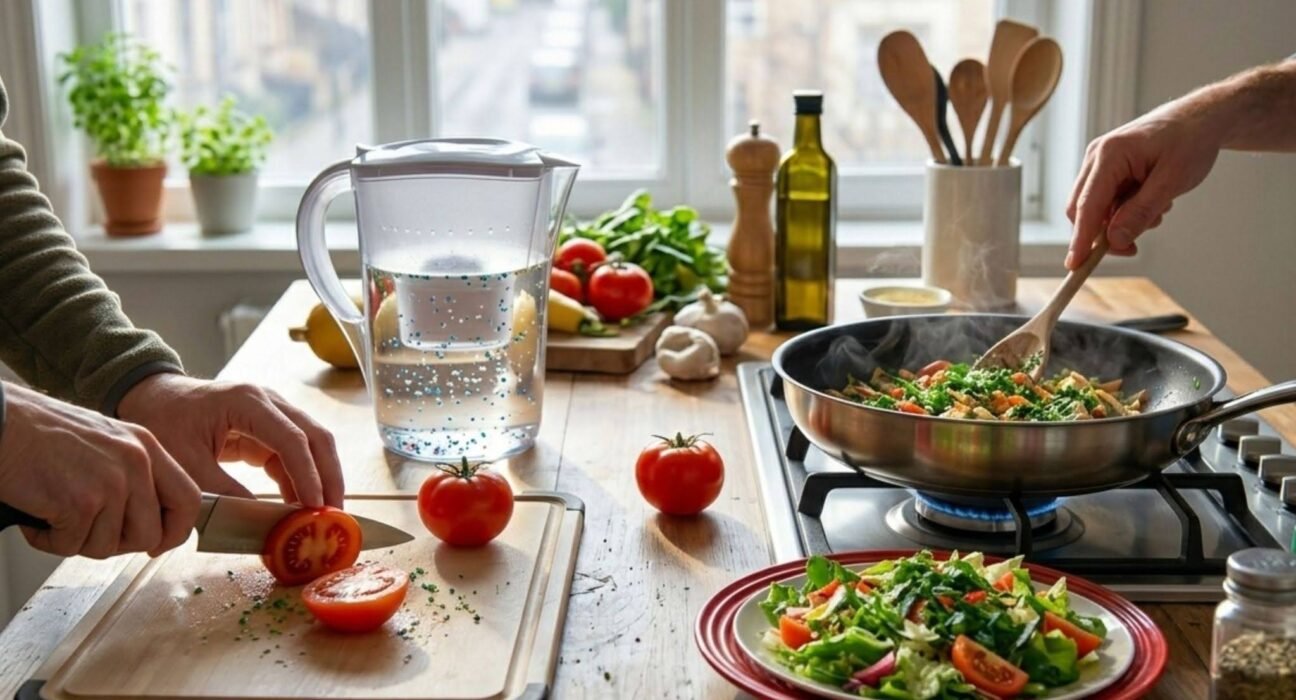
Water exposure can be reduced through point-of-use filtration systems or simple boiling methods. Even small changes in kitchen habits, such as replacing worn utensils or avoiding plastic heating, can make a meaningful difference. Broader advances in consumer technology and home systems are also part of the wider innovation landscape covered in
top technology trends.
Health and Environmental Impacts of Microplastics in Food and Water
Microplastics in food and water have been detected in various parts of the human body, including blood and organs. While research is still ongoing, concerns include inflammation, chemical exposure, and long-term accumulation effects.
From an environmental perspective, microplastics contribute to global pollution affecting oceans, rivers, soil, and wildlife. These particles move through ecosystems and food chains, making them a long-term environmental challenge. The UN Environment Programme’s overview of microplastics offers a broader look at why the issue continues to grow globally.
Moving Toward Solutions for Microplastics in Food and Water
New technologies such as engineered algae systems, natural coagulants like moringa seeds, and improved filtration methods offer promising ways to reduce microplastics in food and water at larger scales.
At the same time, sustainable product design and reduced reliance on plastic materials can help prevent further contamination. Combining innovation with small lifestyle changes offers the most realistic path forward. This prevention-focused approach also aligns with ideas around industrial design and how products can be developed with better long-term material choices.
Conclusion: Managing Microplastics in Food and Water in Daily Life
Microplastics in food and water are now deeply embedded in modern living. They are present in drinking water, kitchen tools, packaging, and even fresh foods. This makes exposure unavoidable in today’s environment.
However, awareness creates control. By understanding where these particles come from and making practical adjustments in daily habits, it is possible to reduce exposure significantly. Improvements in water treatment, kitchen practices, and material choices all contribute to a healthier and more sustainable lifestyle.
FAQs on Microplastics in Food and Water
1. What are microplastics in food and water?
Microplastics are tiny plastic particles found in food, drinking water, and everyday kitchen items that enter the body through normal consumption and use.
2. How do microplastics get into drinking water?
They enter through plastic waste pollution and can pass through water treatment systems because they are too small to be fully filtered out.
3. Can boiling water remove microplastics?
Yes, boiling water can help trap microplastics in mineral deposits, which can then be filtered out to reduce contamination.
4. Are microplastics found in fresh food like fruits and vegetables?
Yes, plants can absorb microplastics from soil and water, meaning even fresh produce may contain small amounts.
5. Which kitchen items contribute most to microplastic exposure?
Plastic cookware, chopping boards, packaging, and sponges are major sources that release microplastics during use.
6. Can we completely avoid microplastics in food and water?
No, but exposure can be significantly reduced by using safer materials, filtering water, and reducing plastic use in daily life.