
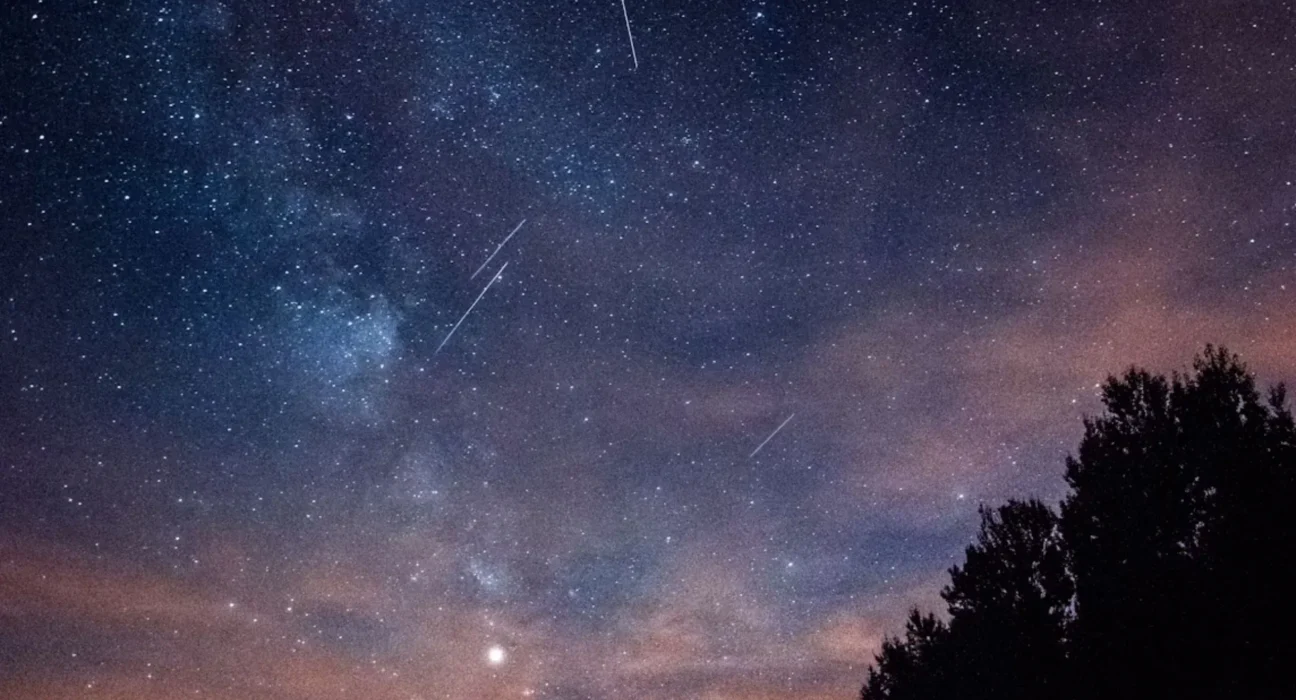
The Orionid Meteor Shower is one of the most anticipated annual celestial events, offering skywatchers a chance to see bright, fast meteors streaking across the night sky. Originating from debris left by Halley’s Comet, the Orionids are visible each October as Earth passes through this cosmic trail.
This guide explains when to watch the Orionid Meteor Shower, what conditions make for the best viewing, where you can see it from, and why this meteor shower fascinates astronomers and casual observers alike.
Table of Contents
ToggleWhat Is the Orionid Meteor Shower?
The Orionids are created when dust and debris left behind by Halley’s Comet enter Earth’s atmosphere at high speed and burn up, producing bright streaks of light. The shower is named after the constellation Orion, where the meteors appear to radiate from.
The Orionid Meteor Shower is known for its fast, brilliant meteors — some leaving persistent trains that linger for seconds after the meteor passes.
When Is the Orionid Meteor Shower This Year?
The Orionids typically occur every year from about October 2 to November 7. The peak — when the most meteors are visible per hour — usually falls around October 20–22. During the peak, observers under dark skies may see anywhere from 10 to 25 meteors per hour under ideal conditions.
For those curious about major astronomy events this year, our article on Orionid Meteor Shower viewing tips explains optimal times to watch.
Best Viewing Tips for the Orionids
Seeing the Orionid Meteor Shower is all about timing, location, and preparation. Here’s how to improve your chances:
- Find a dark sky: Get away from city lights and light pollution for the best experience.
- Look after midnight: Orionids tend to become more active after midnight local time.
- Give your eyes time to adjust: Allow 20–30 minutes for your eyes to adapt to the darkness.
- Dress warmly: October nights can be chilly; wear layers and bring blankets.
- Use a reclining chair: Comfort helps if you plan to watch for an hour or more.
The Orionids tend to produce faster meteors than many other showers, so meteors can appear as brief, bright streaks rather than slow glows.
Where to Watch the Orionid Meteor Shower
The Orionids are visible from both the Northern and Southern Hemispheres. The key is to find an open sky with minimal obstructions like trees or buildings. The constellation Orion rises in the eastern sky, and many meteors appear to emanate from that region.
If you want a deeper look at skywatching and astronomy events, check out our article on Orionid viewing techniques and other sky calendars.
Scientific Background: Why Orionids Happen
The Orionid Meteor Shower occurs because Earth crosses the orbital path of Halley’s Comet each year. The comet’s nucleus leaves behind a trail of dust and small particles, and when Earth intersects this trail, the particles slam into our atmosphere at speeds exceeding 60 km/s. The friction causes them to heat up and burn, creating the meteors we see lighting up the sky.
For more context on how astronomy and technology intersect, our article on technology trends shaping 2026 covers the role of telescopes, sensors, and data processing in modern sky observation.
External Astronomy Resources
Here are trusted external sources where you can check peak viewing times, maps, and sky charts:
- Sky & Telescope – Orionids Guide
- Time and Date – Meteor Shower Calendar
- American Meteor Society – Orionids Info
Final Thoughts
The Orionid Meteor Shower is an annual astronomical highlight for skywatchers. With proper preparation, a dark sky location, and a little patience, you can enjoy one of nature’s most exciting light shows. Whether you’re a seasoned observer or a casual viewer, the Orionids offer a chance to connect with the cosmos and witness the dynamic beauty of our night sky.
FAQs
When is the best time to watch the Orionids?
The best viewing typically occurs between October 20 and 22, after midnight local time for many regions.
Where can I see the Orionid Meteor Shower?
Orionids can be seen from both the Northern and Southern Hemispheres under clear, dark skies.
Do you need special equipment to see the meteors?
No — the Orionid Meteor Shower is best viewed with the naked eye. Telescopes and binoculars are not necessary and may limit your viewing field.